
Resources
Discover lay-friendly resources about Aquaculture in the Southeast United States! Our curated database includes resources for the general public, seafood lovers, educators, extension personnel, and folks in the service industry.
Filters
Search Results

Resources for Seafood in Schools
This resource from the Seafood Nutrition Partnership provides educational materials to help schools incorporate seafood into meals and nutrition education. The page includes recipes, classroom activities, posters, family nutrition resources, and a supplemental five‑lesson curriculum for grades 3–8, designed to support student health, learning, and seafood consumption twice per week.

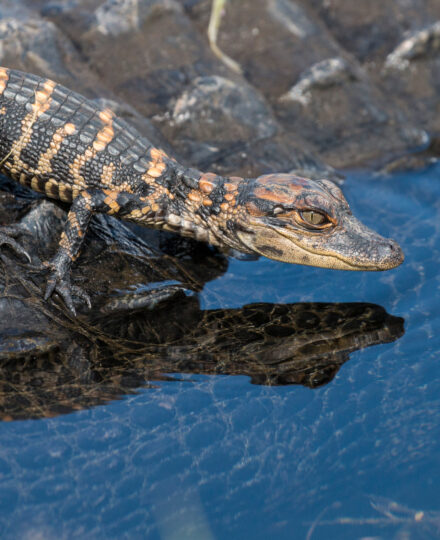
Alligator Aquaculture in Florida
This video demonstrates how helicopters are used to locate wild alligator nests and how crews collect eggs for aquaculture operations. It explains the process of raising hatchlings on farms, including how producers are compensated and how some animals are later returned to the wild. The video highlights the connection between aquaculture, wildlife management, and commercial products like meat and leather.

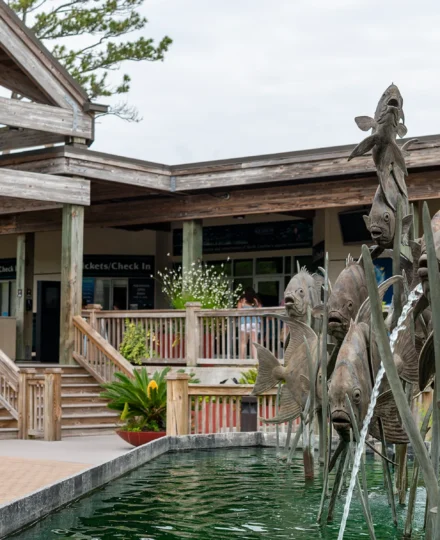
Sea Center Fish Stocking
This video from Sea Center Texas takes viewers behind the scenes of a working fish hatchery, starting with the excitement of feeding thousands of hungry fish. They follow biologists through the entire process, from collecting eggs to releasing young fish into coastal waters, showing how millions of fish are raised each year to strengthen natural populations. It’s an inspiring look at how science, conservation, and everyday work come together to support fishing and marine ecosystems.

Oyster Resources – Distance Learning Lab
Distance Learning Lab: Oysters is an online educational resource from the North Carolina Coastal Federation that explores oyster biology, ecology, and aquaculture. Through videos, lessons, and activities for multiple age levels, the lab highlights oysters’ roles in food systems, water filtration, fish habitat, and coastal restoration.

Climate Resilience and Aquaculture
This NOAA fact sheet explains how aquaculture can support climate‑resilient food production as global demand for seafood increases. It describes how ocean farming uses fewer land, water, and energy resources than traditional agriculture, while offering opportunities for adaptation, such as selective breeding and controlled growing conditions. The fact sheet also highlights benefits like reducing greenhouse gas emissions, supporting coastal communities, and mitigating impacts such as ocean acidification through species like seaweed.

Get Aquacultured Podcast – Fish
This Get Aquacultured! podcast episode features Dr. Dan Benetti, who discusses generative and regenerative aquaculture, finfish production challenges in the United States, and investment opportunities. The conversation addresses offshore and land‑based aquaculture systems, regulatory and economic bottlenecks, and the role of collaboration and innovation in advancing sustainable finfish aquaculture.

Oyster Gardening on the Northern Gulf Coast
Oyster Gardening on the Northern Gulf Coast is a community‑based restoration program that engages volunteers in growing oysters at waterfront sites to support reef recovery. Participants maintain off‑bottom oyster gardens that improve water quality, provide marine habitat, and contribute oysters for restoration efforts across Alabama and Mississippi coastal waters.

Where Does Our Seafood Come From?
A short educational video introduces how aquaculture plays a major role in global seafood production while highlighting the gap between U.S. consumption and domestic supply. It features researchers from NC State University who explain how expanding aquaculture could improve food security, sustainability, and innovation in seafood production. It also offers insight into real research, including advances in fish breeding and technology, giving viewers a forward-looking perspective on the future of aquaculture.

Teach Aquaculture
Teach Aquaculture is a UF/IFAS education program providing free, downloadable curriculum modules that support aquaculture and aquatic science instruction. The materials cover species biology, production systems, water quality, nutrition, and aquaculture careers, with hands‑on activities and classroom‑ready resources for educators. These modules have been written at a 9th grade level, but are highly adaptable to grades K-12.
Disclaimer: The content contained herein is for informational purposes only. The Southeast Aquaculture Communications Collaborative does not endorse the content and does not guarantee the accuracy, completeness, or usefulness of the information. The Southeast Aquaculture Communications Collaborative does not accept liability for any injuries or damages caused by those acting upon or using the content contained on this website.