
Resources
Discover lay-friendly resources about Aquaculture in the Southeast United States! Our curated database includes resources for the general public, seafood lovers, educators, extension personnel, and folks in the service industry.
Search Results
Filters

FAU Harbor Branch Aquaculture Virtual Field Trip
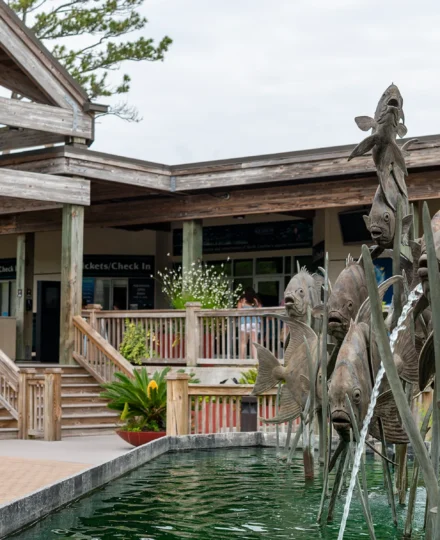
This video provides a guided virtual tour of the FAU Harbor Branch Aquaculture Park, introducing students to aquaculture research facilities and practices. Viewers learn how aquatic plants and animals are cultured, how systems are designed to support sustainable seafood production, and how aquaculture contributes to food security and environmental research.

Oyster Farming Grows Market (Part 2)
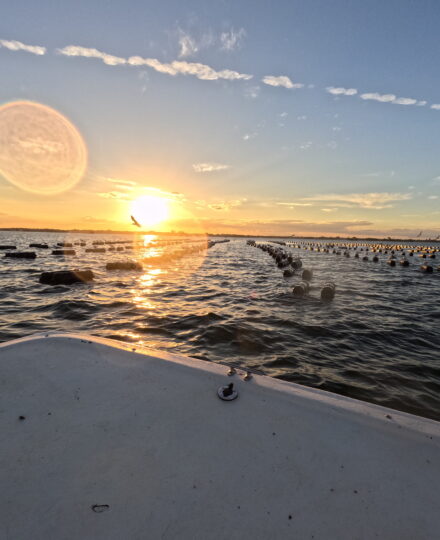
This video highlights an off‑bottom oyster farming operation at Point Aux Pines in Mobile Bay, Alabama. It describes how farmed oysters are produced at commercial scale to support local seafood supply, restaurants, and coastal economies, while also contributing environmental benefits such as increased oyster presence and water quality improvement.

Lessons in Mariculture
Lessons in Mariculture is an educational curriculum developed by North Carolina Sea Grant that introduces students to marine aquaculture in the state. The program includes a series of free, standards‑aligned lesson plans covering aquaculture species, biology, production methods, environmental considerations, and business planning, supporting science education and career exploration in mariculture.

Resources for Seafood in Schools
This resource from the Seafood Nutrition Partnership provides educational materials to help schools incorporate seafood into meals and nutrition education. The page includes recipes, classroom activities, posters, family nutrition resources, and a supplemental five‑lesson curriculum for grades 3–8, designed to support student health, learning, and seafood consumption twice per week.

Ensuring the safety of seafood after the Deepwater Horizon oil spill
This video explains how seafood from the Gulf of Mexico was tested after the Deepwater Horizon oil spill to ensure it was safe to eat. It highlights scientific testing methods used to protect public health and describes collaborative efforts supported by the Gulf of Mexico Research Initiative and regional Sea Grant programs.

eConch
This free, self‑paced online training program teaches queen conch aquaculture for conservation and restoration, with a strong focus on the Caribbean region. The seven‑module course covers microalgae culture, egg mass collection and hatching, larval rearing, metamorphosis, juvenile culture, and restoration practices, providing step‑by‑step guidance supported by expert instruction and visual resources.

The History of Offshore Aquaculture Governance in the Gulf of Mexico
This UF/IFAS Extension fact sheet explains how offshore aquaculture in the Gulf of Mexico has been governed over time. Written for stakeholders, educators, and interested community members, it outlines how federal and state roles have evolved and why offshore aquaculture can be complex to manage. The resource helps readers better understand the regulatory landscape behind offshore fish farming.

The Oyster Calculator Lesson Plan
This is an educational activity that introduces how oyster aquaculture can remove excess nitrogen from coastal waters. The lesson guides students in designing a small‑scale oyster farm and using scientific data tools to explore water quality, nutrient cycling, and the role of oysters in improving coastal ecosystems.

Nature’s Water Filter: Oyster Lesson Plan
This educator lesson plan introduces oyster filtration as a key ecosystem service for grades 2–12. Using hands‑on experiments and data collection, students explore how oysters improve water quality in estuaries. The activity emphasizes oyster biology, estuarine ecosystems, and the role of oysters as keystone species supporting environmental health.
Disclaimer: The content contained herein is for informational purposes only. The Southeast Aquaculture Communications Collaborative does not endorse the content and does not guarantee the accuracy, completeness, or usefulness of the information. The Southeast Aquaculture Communications Collaborative does not accept liability for any injuries or damages caused by those acting upon or using the content contained on this website.